Showing posts with label Arad. Show all posts

Wednesday, May 29, 2019

It's Time To Go Home


I was in high school when I decided (maybe "realized" is a better word) that I wanted to live in Israel. I came for a year on kibbutz when I was nineteen and stayed most of a second year, in Jerusalem. Then went back to the US to prepare myself for aliyah. I felt it was the right thing - the only thing - to do.
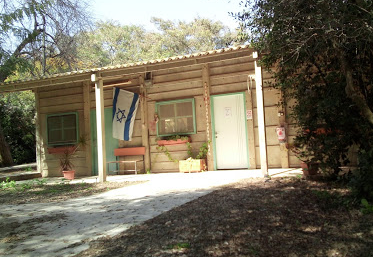
I arrived back in Israel on the eleventh of Tammuz, forty-six years ago.

During those four years in Chicago, I became a member of a gar'in, a group who were planning to live on kibbutz together. Most of those were people I knew.  We were assigned to Kibbutz Alumim, in the south, abutting the Gaza fence.

Things were different then. Of course Gaza was hostile and the army checked the fence daily, but during the watermelon harvest, we drove into Gaza on tractors, pulling loads of watermelons to the packing facility on the other side.

Those days are long gone, of course, as are my own days on kibbutz. I was there two years, which included six months of army service (artillery) to prepare me for reserve service which didn't fully end until I was fifty-six, by which time my service was driving a jeep for combat troops in the Judean Hills. The last years, I served as a volunteer because I thought it was the right thing to do.


Back in my artillery days, we generally did - in addition to training - about three weeks each year patrolling in Gaza, including in Gaza City itself. We could walk freely, with our guard up, in most parts of Gaza. It was rare indeed when we encountered hostile activity. They knew better than to try.


My next stop was Yeroham, a development town deeper in the south. Where the promise of tomorrow was always just out of reach.

I was there for five years, working mostly in the Beer Sheva offices of a company whose chemical plants were at the Dead Sea and nearer Beer Sheva in the middle of nowhere. "Nowhere" being the desert, but it was becoming home.
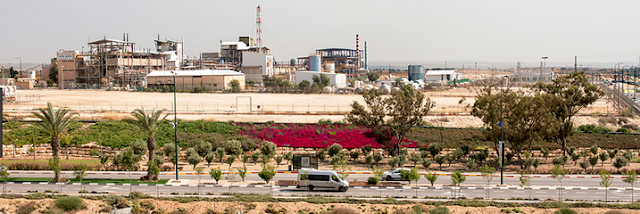
That was followed by eleven and a half years in Arad, a much larger town - now a city - east of Beer Sheva. And I spent more time in the desert and on its roads. The paved and the unpaved.

Occasionally I would pick up hitchhiking elderly Beduin men and a couple of times Beduin stopped to help when I had car trouble.

After eighteen and a half years living and working in the south, I moved to Elazar, in Gush Etzion, a bloc of communities about fifteen minutes south of Jerusalem. It is a community where you have to be accepted for membership. I declined.

For sixteen years I lived there while working in Yeroham. Most of the time, I would leave at 4:15 in the morning, drive to Beer Sheva, go to a 5:40 minyan and ride the 6:35 company bus to Yeroham, where work began at seven. There were a few years when I did that only three days a week - the other two days I'd work late and sleep over in Yeroham.
Often I would drive all the way to the office. The road through Susya had all of two stop signs from start to finish.


I felt as though I owned those roads of the Southern Hevron Hills. At first, there was no by-pass road and I would drive through the city of Hevron itself, especially when I'd stop to see my mother in Arad on the way home. The early morning fog was mine. The view of the fog from the mountaintop into the valley made Arad look like Teverya on the edge of Lake Kinneret.

During the run-up to Ariel Sharon's infamous expulsion of the Jews from Gush Katif fourteen years ago, I spent some nights and days among the protestors.

I participated in the human chain from Gaza to Jerusalem to protest Sharon's refusal to accept the results of the referendum which had rejected his plan.

I was one of the tens of thousands spending nights and days at the Kefar Maimon protests - and generally I am not someone who attends protests. It was not just that we all knew that Gaza would end badly nor it was simply the government's trampling of democracy; it was also the very fact that our government was surrendering our patrimony.


A few of the Kefar Maimon protestors

And I drove in the procession escorting Yochanan Hilberg to his new grave after the expulsion. 

Since then, Gaza became what we knew it would become - and worse. Hamas took over, launching rockets and missiles into Israeli communities - most notably Sderot, but also at the smaller communities and at cities like Ashkelon, Ashdod and even Beer Sheva. They used their own civilians - including children - for cover. And they dug tunnels under the border. And we went to war - "Cast Lead," "Pillar of Defense" and "Protective Edge."

In the meantime, I had taken early retirement and no longer drove south every day. On the eleventh of Tammuz, the thirty-fifth anniversary of my aliyah, I became a resident of our eternal capital Jerusalem. I became deeply involved in genealogy and later DNA. Wrote a book. Lectured. Got on with my life.

In the past year, the Gazans have discovered a new weapon, in addition to the rockets and missiles. Balloons and kites, booby-trapped with explosives, intended to kill and maim children as well as adults. And intended to start fires.

It leaves us wondering what can we do. We as a government and we  as individuals.


After a brief respite, it started again a few weeks ago. A few people were killed in Israel, including in Ashkelon, a city of about 140,000 people - which for me was always a place to take the kids to the beach.

And Alumim's wheat fields burned. The view from Gaza, where the terrorists and their supporting civilian population celebrates.

So I decided it's time to go home. South. Ashkelon seemed like a good idea. Considering the decision was making it.

I saw two apartments for rent. Signed on one of them last night. Joined the English Speakers of Ashkelon. Devir gets married in forty days. The mover is confirmed for the following Monday. The twelfth of Tammuz, forty-six years and one day later. Eleven years after arriving in Jerusalem.

This Sunday we celebrate the fifty-second anniversary of the liberation and reunification of Jerusalem. In Psalm 137 we say:
If I forget thee, O Jerusalem, may my right hand forget its cunning. May my tongue cleave to the roof of my mouth, If I do not remember thee, if I do not raise Jerusalem above my highest joy.

All that is true and valid. But I am going home. It's the right thing to do.


Housekeeping notes
Register here.


Monday, February 12, 2018

A New Torah Scroll in Arad

Yes, there are some bits of Pikholz and personal genealogy here.

I left the southern Israel city of Arad twenty-six years ago, having lived there for eleven years. I maintained contact with Arad for quite a few years after that - my mother lived there for fifteen years after I left, I had other friends and family there and it was on one of my routes home from work.

Moshe (seated left)
with the scribe,
completing the writing
And I maintained contact with others who had left either before or after me. One of these is Moshe Kalush, an electrician, now retired. He left a year or two before me and lives in Beer Sheva. He would often phone his old Arad friends before the holidays.

Moshe phoned me a couple of months ago to tell me that he was donating a Torah scroll to the Ulpana, a girls' religious high school in Arad and he really wanted me to come to the ceremony and celebration which was scheduled for last Wednesday.

He was never a man of great means, Moshe, and he financed this major donation by collecting bottle refunds and by taking apart and selling old motors.

As it happened, the ceremony and celebration were scheduled three days before the thirty-first anniversary of my sister's death, about which I wrote at length here and in passing on other occasions. She had lived up the street from the Ulpana and for a time we had a fund in her memory to sponsor an Ulpana graduate for a year of nursing school.

So after the ninety-minute drive and before attending the ceremony, I stopped an my sister's grave and while I was there, paid my respects to four friends of mine who are buried in a group beginning one row from her grave. I had seen two of those new graves last year. The other two were more recent and in fact I had only heard about the passing of one of those later two. Had they lived a bit longer, they too would have likely participated in the day's activities. In fact, I saw the widows of two of them later in the day.

The day after I posted this blog,
I ran across this picture of Mindy's aunt and uncle with my mother.
On the way out of the cemetery, I ran into an old friend, Mindy Sherman whom I had known in my pre-Arad days when I lived in Yeroham. Mindy still lives there. She had an aunt and uncle, Chaya and Yitzhak Yaakov Bistritz who lived in Arad. I knew him back then; he died years ago. Chaya, Mindy's mother's sister, had been living in a nursing hme in Beer Sheva and had died that very day. Mindy was there for the funeral. Small world stuff.

From the cemetery, I went into Arad to the Hashahar synagogue where the final writing of the Tprah scroll was taking place. I had been a member of Hashahar for a number of years and even after leaving Arad I returned there maybe half a dozen times for Yom Kippur. That is also where my sister's body had lain overnight while we waited for the morning funeral thirty-one years earlier. The assembled crowd included several others who had left Arad many years ago - Moshe Kalush had done a good job in gathering up much of "the old gang." Some of those still live in Arad, as do some of their children - whom I know, of course.

The program was organized by Yishayahu Ungar and his wife Shifra. He called me up to write one of the letters in the final verse. The scribe asked my name and when I said "Pickholtz" he asked if I know the school by that name. That would have been the agricultural school in Petah Tiqva about which I wrote here a few years ago. It was often referred to as "The Pikholz School," but Eliezer Pikholz Haniel - the first known Pikholz to return home - has been dead for nearly forty-eight years so I was surprised that the scribe knew it. Eliezer was an agronomist who discovered oil in Kibbutz Hulda before the First World War, but I have told that story before.  

The scribe demonstrated one of my favorite family genealogy principles, that the name Pikholz is both uncommon and unusual, so anyone who has ever met one of us will undoubtedly remember when and where.

After the writing was completed (and the brief afternoon minha service) we went down towards the Ulpana and waited for the procession to begin. This took place right in front of my sister's house. (Remarkable how many connections there were between these two unconnected events.)

Many more people joined us, particularly young people. Those included my sister who still lives in Arad and probably the last of my mother's friends who still lives there.


We danced our way down the street and continued the dancing in the yard of the Ulpana itself as night fell.

We ended up in the Ulpana synagogue where there was more dancing, including with the other two scrolls in the ark.


The cover of the new scroll tells us
that it was donated in memory of
Moshe's parents and
the parents of his wife Etti.

Yeshayahu read from the new scroll and and there were a few very brief speeches (Nothing long-winded here. Moshe wouldn't have stood for it!), including Rabbi Mordecai Cohen of "the old gang," the mayor of Arad and Moshe himself. After a brief evening maariv service, we adjourned to the dining room for a festive meal.

It was getting late and I took my leave before the eating began.


Housekeeping notes
I shall be speaking for the Jewish SIG of the St. Louis Genealogical Society on the thirtieth of April and will be giving two presentations for the new Kansas City Jewish Genealogical Society on the second of May. Topics to be determined.

A couple of days ago, I found a reel of recording tape which, according to the label, is my bar mitzvah reading. I remember doing that for my father the Thursday before my bar mitzvah. It is undoubtedly embarrassingly bad, as I had no idea how to read properly back then but I have nonetheless given it to someone to have it digitized. So my grandchildren can laugh at me.

Lara Diamond has created something she calls Ashkenazic Jewish Shared DNA Survey, which shows how much DNA is shared by known Jewish relatives. This is new and I expect we shall see significant analysis in the not-too-distant future. This is different from Blaine Bettinger's Shared CM Project  which does not account for Jewish endogamy.

Sunday, February 5, 2012

MOTHER'S FIRST YAHRZEIT

I suppose I should be writing at length about my mother - Beatrice (Batya) Pickholtz - but I am not up to that. At the funeral I wasn't either, speaking then mostly about Mother's death rather than about her life. But here is the basic bio.

Mother was not yet born when this was taken in 1924.
Mother was born on the second day of Elul, 5686 (12 August 1926) in Vandergrift Pennsylvania, the youngest of the five children of Raymond and Sarah (Rosenbloom) Gordon. There were two grandfathers living in Russia, but the family - on both sides - lived mostly in Washington DC, with one aunt in New York.

They visited the family in DC fairly frequently, considering the times, and Mother was quite close with her older cousins who lived there. Mother also got her first real work experience in DC, where she spent several summers as a teenager. (Her Social Security card was issued there.)

Mother was also permitted to attend a Jewish overnight camp, partly as compensation for her meagre Jewish education. She spoke of this experience - and other aspects of her childhood - in an interview with the investigative journalist David Bedein, while she was living in Beer Sheva. (That is not to say that there was no Jewish education whatever.  Mother attended Kiski Valley Religious School and was confirmed.)

Mother was accepted to the University of Pittsburgh and there met Betty Pickholtz, who introduced Mother to her brother,
 who had recently returned from the War. They married soon after, on 22 September 1946  at the Poale Zedeck Synagogue in Pittsburgh, where Father's parents were active members.

They moved into an apartment made out of someone's third floor on Shady Avenue and then into a small semi-detached house on Woodbine Street in Stanton Heights. And the children began coming.  There were five within their first seven years of marriage and by then they were in their third house, on Stanton Avenue.  We lived in that house nearly three-and-a-half years, a short time, but long enough for a major remodeling.

Mother did the bulk of the child-raising, as Father was on the road several days a week. And for those of you who have always admired her calm and patience,... well maybe I should just leave that alone. As the eldest, I was given alot of independence. (The kindergarten teacher was appalled that I was left to come home myself, from the very first day.) But under the circumstances, it couldn't have been much different.

After first grade, we moved one final time, to the house on Denniston in Squirrel Hill, where we spent sixteen years and where the two youngest girls were born. Schools, shul, one set of grandparents and other family were within walking distance. (Despite everything to do at home, Mother was very active in the school.)

They (I was out of the house by then and my brother remained in Pittsburgh) moved to Williamsport Pennsylvania and a year later - when the three older girls finished high school - to Israel. An absoption center in north Tel-Aviv, then a three-bedroom apartment in suburban Kiron. Father worked for Motorola. The three older girls were on programs that had them living away. And Mother was diagnosed with cancer. Surgery, treatments, I never needed to know the specifics.

After three years, they went back. With the two younger girls. They fully intended to return after Father's retirement and rented out the apartment. They rented and later bought in Skokie Illinois and Father went to work for Motorola, eventually securing a position which enabled him to visit the Israeli office (and the four children who remained here) several times a year. But Father had one heart attack too many and Mother was a widow at fifty-four.

But she had always intended to return to Israel and so she did, at age sixty, renting an apartment in Arad, where three of her children lived. One was killed in an accident two months later. (More on that sometime next week - I told you Shevat is a tough month around here.) After a year, Mother sold the Kiron apartment to the people who had been renting and bought the Arad apartment she had been renting and she lived there twenty years, as long as she had lived in her parents' house.

That third floor, three-bedroom apartment was her only home that most of the grandchildren ever knew. And they knew it well. As they got older, they would spend time there with Mother, without their parents, often several at a time. In their teen-age years, Mother had a full summer schedule of visitors, and as she got older, they were able to help her with whatever needed doing.  Mother had independent and individual relationships with each of her grandchildren, from eldest to youngest. And out-of-the-way Arad became part of the itineraries of family (and lots of non-family) visiting from abroad.

Eight years after Mother arrived in Arad, the cancer came back. It brought with it other health problems including a marked decrease in mobility.

Eventually, Mother decided she could no longer live alone and moved into a seniors facility in Beer Sheva, where she had her own 59 square meter apartment and an option to eat one meal a day in the dining hall. It worked for awhile, but after less than two years it became clear that she needed something with more personal attention. There was some discussion about going back to the United States, but - although Mother was prepared to do that if we all thought it best - she really wanted to be here. "Going back" would have been an admission of failure.

Mother's last twenty-seven months were in Jerusalem, first in a room for "independents" and later in a full care department at the same facility. The first ten months were very good, but after that things went downhill quickly and we thought that the end was close.  Then on Simhat Torah, from her fog, Mother said to me "I'm not ready yet" and a week or so later was sitting up having normal conversation. We had another fifteen months.  Some days better, some days worse, but she knew who everyone was and mostly she was clearly in control of her thoughts and her conversation.

Often during those last months, Mother would tell me that Uncle George was coming, with her father's truck, from the furniture store.  To take her home. She looked forward to that.

And so he did. On Tu BiShevat morning, at five past eleven (four years nearly to the hour after her good friend Miriam Goldberg), at Hadassah Hospital.

We buried her the next day, next to Father, in the Segullah Cemetery in Petah Tiqva. I plan to go to the grave Wednesday, the fifteenth of Shevat. First time since sheloshim. Then again Friday, when we are to go to Judith's afterwards for brunch.